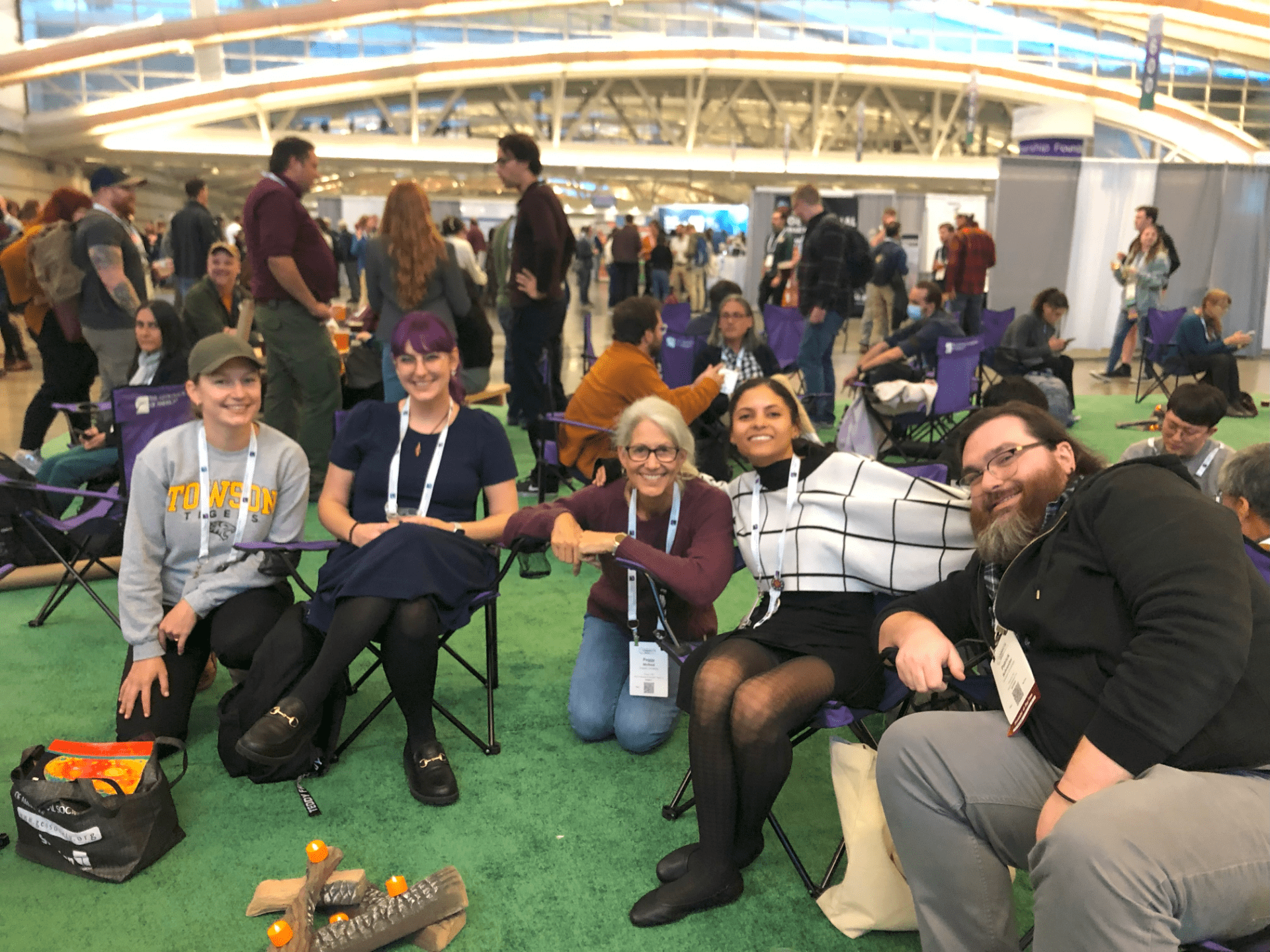
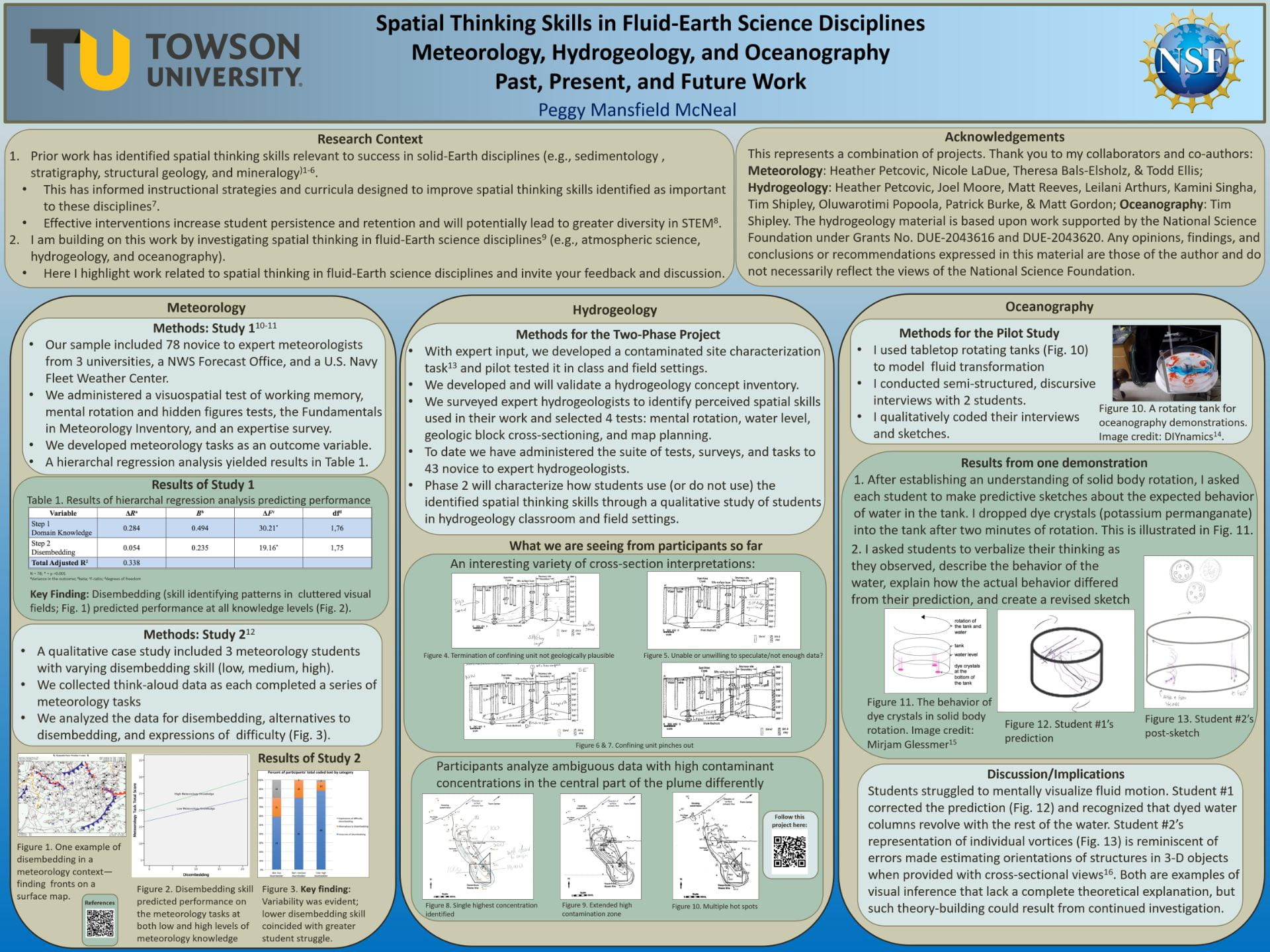
We study how people learn in fluid-Earth science disciplines — oceanography, atmospheric science, and hydrogeology — with a focus on the spatial reasoning these fields demand.
Our work spans three audiences: undergraduate students, future K–12 teachers, and the geoscience education research community. We pair rigorous, discipline-based education research methods with hands-on tools — rotating tanks, density demonstrations, and field studies of severe weather — to understand how spatial thinking develops and how experts pass it on to students.
Research Projects
Our projects share one question: how do people reason spatially about fluids in the Earth system, and how do they learn to do it well?
Spatial Thinking in Hydrogeology
How students and experts predict contaminant movement through the subsurface. (NSF #2043616 / 2043620)
Density & Rotating Tanks
Using a rotating-tank lab to study how students reason about stratification and geophysical fluid dynamics. (NSF DUE-2225637)
Cognition in the Wild
Embedding researchers in convective field studies to see how experts and students reason about severe weather. (NSF AGS-2413370 / 2413371)
Atmospheric Science Education Research
Building a discipline-based education research community in the atmospheric sciences. (NSF AGS-2224006)
Spatial Thinking in Meteorology
Identifying the spatial reasoning skills essential to thinking and learning in meteorology.
Draw an Earth Scientist
Using student drawings to investigate conceptions of who geoscientists are.